
Right Side Human Rights Defender NGO Held a Three-Day Advocacy Capacity-Building Camp for LGBTIQ+ Youth
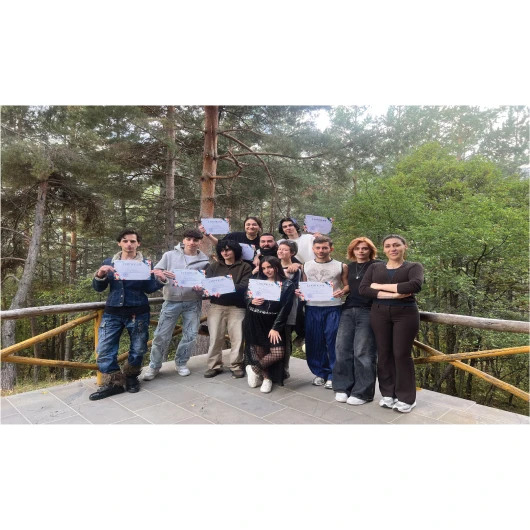
From October 22 to 24, 2026, Right Side Human Rights Defender NGO held a three-day advocacy capacity-building camp for LGBTIQ+ youth in Aghveran, Armenia. The program aimed to strengthen participants’ knowledge and practical skills in human rights protection, advocacy, communication with state institutions, and the development of initiatives addressing community challenges.
The organization received 47 applications for the camp. The selection committee carefully reviewed and evaluated all applications, taking into account applicants’ motivation, interest in advocacy, and readiness to participate in the program. Following a competitive selection process, 15 participants were selected from 47 applicants.
The three-day educational program was facilitated by Lilit Martirosyan, who served as the facilitator and trainer. The camp employed interactive learning methods, group discussions, practical exercises, case studies, and role-playing activities.
On the first day, participants were introduced to the concept of advocacy, its objectives, and its main tools. They explored the differences between advocacy, activism, and public awareness-raising, as well as opportunities to achieve concrete changes in the field of human rights protection.
Using the “Problem Tree” method, participants analyzed the root causes and consequences of different challenges, learned to identify underlying problems, and translate them into clearly defined advocacy objectives.
Throughout the day, participants also learned about mechanisms for communicating with state authorities, including the differences between formal applications, complaints, and requests for information. During practical exercises, they drafted sample applications, focusing on the clear presentation of facts, identifying the competent authority, and formulating specific requests.
Reflecting on the educational content of the camp, one participant shared:
“Over these days, I gained much deeper knowledge. Developing an advocacy action plan was particularly important to me. I learned how to define a problem, what steps to take, and how to turn the protection of my rights into concrete actions. The camp topics were very well chosen, and most importantly, I can apply the knowledge I gained in real life.”
— Camp participant
On the second day, participants learned about the functions of state institutions in the Republic of Armenia and the protection and support mechanisms available in cases of human rights violations.
Particular attention was given to the role and powers of the Human Rights Defender of Armenia (Ombudsperson). Participants explored the institution’s responsibilities, the circumstances in which individuals can submit complaints, and the information required when reporting potential human rights violations.
The sessions also covered the functions of the police, investigative bodies, prosecution authorities, and courts, including the distinctions between these institutions and the main characteristics of criminal, civil, and administrative judicial proceedings. Participants became familiar with the different levels of the judicial system, appeal procedures, and available domestic legal remedies.
The program also addressed international advocacy mechanisms and the role of civil society organizations in engaging with international institutions. Participants learned how human rights organizations cooperate with the United Nations, the Council of Europe, and other international human rights bodies by submitting human rights reports, documenting violations, highlighting systemic challenges, and providing recommendations.
Discussions also covered international monitoring mechanisms, the preparation of alternative or shadow reports, international advocacy campaigns, and their importance in influencing public policies and legal reforms.
The role of the European Court of Human Rights (ECtHR), international human rights protection mechanisms, and the general requirements for submitting applications were also discussed.
Participants explored opportunities to communicate electronically with state authorities, including the use of the e-request.am unified platform and other online platforms, the preparation of information requests, and procedures for submitting official applications.
One participant highlighted the practical value of learning about human rights protection mechanisms:
“It was particularly useful for me to learn how to apply to the Human Rights Defender, what procedures exist, which institution to approach in different situations, and how to protect my rights and the rights of my community. Previously, many things were unclear to me, but now I have a much better understanding of the steps I can take if my rights are violated.”
— Camp participant
Separate discussions focused on documenting potential human rights violations, collecting and preserving evidence, protecting personal data, and ensuring safe communication.
Through role-playing activities and scenario-based exercises, participants put their newly acquired knowledge into practice. They analyzed examples of potential human rights violations, identified the appropriate state institutions or support mechanisms to approach, formulated relevant requests, and practiced communication and negotiation skills with decision-makers.
Participants also engaged in problem-mapping exercises, learned to develop effective advocacy messages, and discussed digital advocacy tools, security risks, and the “Do No Harm” principle.
The trainer’s approach and the active engagement of participants were also highlighted in the feedback received during the camp.
“I have attended various lectures and educational meetings for many years, but I was genuinely amazed by the topics presented by Lilit Martirosyan. She was able to explain even complex issues in such an accessible and understandable way. What impressed me most was how she engaged with the audience, involved everyone, and created an environment where you constantly wanted to ask questions, discuss, and learn.”
— Camp participant
On the third day, participants consolidated the knowledge gained during the previous sessions and discussed ways to overcome challenges encountered in advocacy processes.
They examined situations in which an initial application or complaint submitted to a state authority does not lead to the expected outcome, as well as possible subsequent legal and advocacy steps.
The discussions also addressed the role of civil society organizations in human rights protection, community support mechanisms, and opportunities for cooperation in advancing the rights of LGBTIQ+ people.
During practical exercises, participants developed small-scale advocacy action plans, identifying the problem, desired change, responsible institutions, necessary actions, potential risks, and expected outcomes.
The three-day camp concluded with a program review, participant evaluations, and the presentation of certificates of participation.
The warm and collaborative atmosphere created throughout the camp provided participants not only with educational opportunities but also with a space for mutual support, experience-sharing, and building new connections.
“I had no idea the camp would be so welcoming while also offering such an intensive learning experience. We studied, discussed, and worked in groups from 10:00 a.m. until 7:00 p.m., but even afterward, we still wanted to continue discussing the topics with our friends. It was so interesting that, even after the training sessions ended, we still wanted to talk about everything we had learned.”
— Camp participant
Many members of the LGBTIQ+ community face barriers to education and professional development due to discrimination, unequal treatment, and social obstacles based on their sexual orientation, gender identity, or gender expression. These challenges can limit their full participation in public life, the exercise of their rights, and the development of their personal and professional potential.
Expanding educational opportunities and strengthening the knowledge and skills of community members are among the strategic priorities of Right Side Human Rights Defender NGO. The organization recognizes education not only as a fundamental human right but also as an essential means of promoting individual autonomy, community empowerment, human rights protection, and social change.
As part of this approach, the organization strives to create safe, inclusive, and accessible educational environments where LGBTIQ+ individuals can acquire essential knowledge, develop their capacities, understand their rights, and participate more effectively in decision-making processes affecting their lives and communities.
The three-day camp provided another opportunity for participants to deepen their understanding of human rights, the functions of state institutions, and available protection and support mechanisms. Through group work, role-playing activities, and scenario-based discussions, participants strengthened their ability to analyze problems, identify relevant institutions, prepare official applications, document potential human rights violations, and plan advocacy actions.
For one participant, the camp became an additional motivation to become more actively involved in community advocacy efforts.
“I have already approached Right Side NGO and asked them to always involve me in advocacy activities. I would be very happy to participate in meetings with representatives of state institutions, representing the voice, concerns, and needs of our community. I want not only to know my rights but also to actively participate in protecting them.”
— Camp participant
Right Side Human Rights Defender NGO will continue organizing similar educational meetings, training sessions, and capacity-building programs for members of the LGBTIQ+ community. These initiatives will focus on expanding educational opportunities, increasing awareness of human rights, developing practical skills, and strengthening community engagement.
For the organization, community education is an ongoing and strategic commitment, grounded in the belief that a community equipped with knowledge and essential skills is better prepared to defend its rights, voice its needs, and actively contribute to shaping changes that affect its future.


By donating, you become an ally in protecting the lives and rights of Trans and LGBIQ individuals

